

ExpressWithACard Blog
Top 5 Trends Shaping Digital Greeting Cards in 2025
 May 29, 2025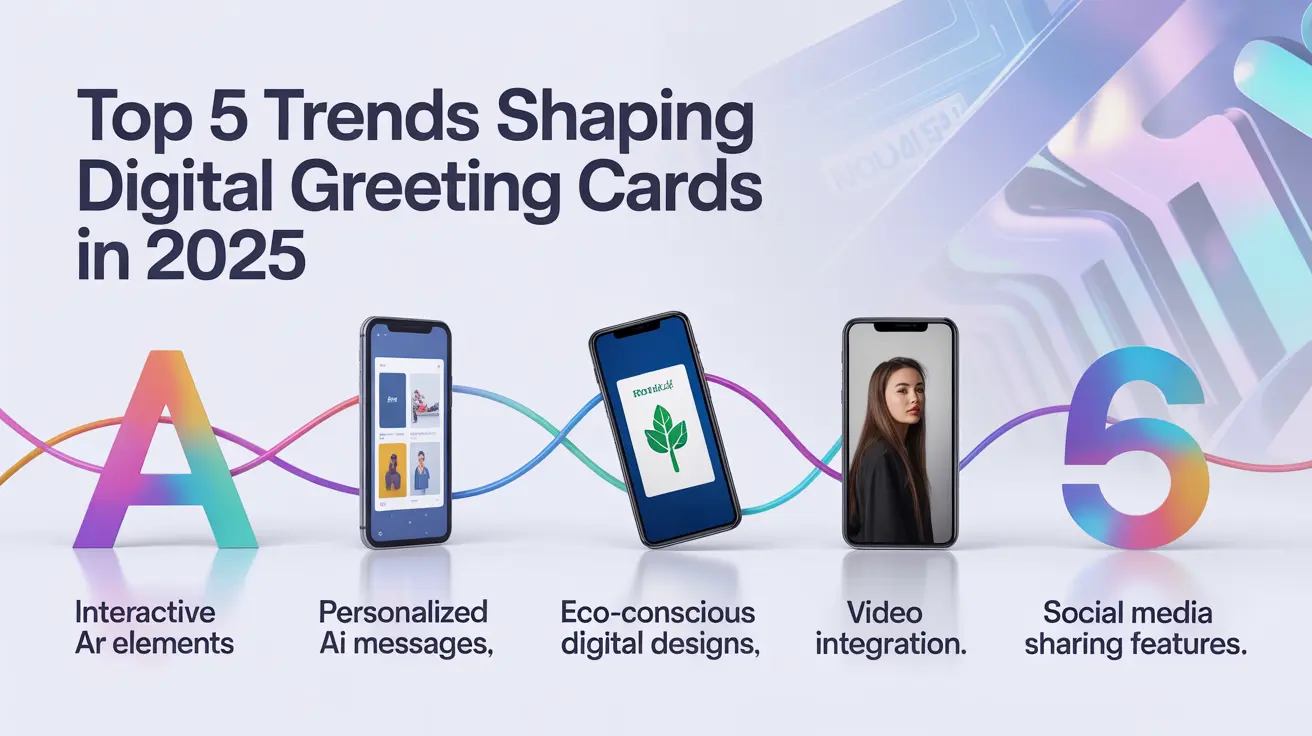
Introduction: A New Era of Greeting Cards
Digital greeting cards have come a long way from the early days of simple e-mail cards with basic animations. As we step into 2025, e-cards are more dynamic, personalized, and widely used than ever. The combination of new technologies and changing user preferences is propelling the e-card industry forward. To understand where e-cards are today (and where they’re headed), let’s dive into the top five trends shaping digital greeting cards in 2025.
Trend 1: AI-Powered Personalization: Greeting Cards Get Smarter
Artificial intelligence is infusing greeting cards with a personal touch that was once hard to achieve at scale. AI-powered personalization is one of the hottest trends in 2025 and beyond, as e-card platforms leverage AI to help users craft the perfect card.
What does this mean in practice? AI can assist in numerous ways:
- Message Suggestions: Stuck on what to write in that birthday card to your colleague? AI can analyze your relationship (perhaps based on past messages or common interests) and suggest a heartfelt message or even a bit of humor. We’re seeing AI-driven tools that propose custom text from sweet wishes to funny one-liners tailored to the occasion and recipient. This helps people who struggle with finding the right words to still send a meaningful card. In fact, one report notes that AI-driven personalization is gaining traction, with around 58% of users now choosing e-cards that include customizable images, messages, or animations (businessresearchinsights.com). This indicates that more than half of e-card users actively seek that personalized content, and AI is stepping up to facilitate it.
- Design and Content Personalization: Some e-card services now use AI to recommend designs or even generate artwork. For example, if the recipient loves dogs, the platform might suggest a few dog-themed card templates (or use AI to create a unique dog illustration). If you’ve granted access to certain data, an AI might pick up on the fact that the recipient recently got married and suggest incorporating a wedding photo into the card. Essentially, AI can help tailor both the visual and textual elements of a card. A blog on industry insights highlighted how AI-based suggestions are on the rise, helping users create deeply personal cards that reflect the recipient's interests and the sender’s true feelings. This could range from suggesting a color scheme the AI knows the recipient likes (maybe gleaned from their social media profiles) to selecting a quote from their favorite movie to include.
- Automated Personalization at Scale: For businesses or people who need to send many cards, AI allows a level of personalization without manual effort on each card. Imagine a company sending 500 client thank-you e-cards, each one addressing the client by name and referencing a product they bought, AI can pull that data in and generate each message appropriately. We see this in email marketing already; now it’s happening in e-cards, making mass-sent greetings feel one-of-a-kind for the receiver.
The data backs the momentum of this trend. A market analysis found 39% growth in AI personalization tools usage within e-card platforms (globalgrowthinsights.com). And key findings from BusinessResearchInsights mention that AI-driven content creation and AR-enhanced greetings are developments set to change how we convey emotions in digital cards (businessresearchinsights.com). All this suggests that in 2025 and beyond, sending a generic e-card is old news it’s all about that uniquely crafted message and look, often courtesy of some AI help behind the scenes.
Trend 2: Interactive & Animated Cards, Bringing Greetings to Life
Static text and flat images are no longer enough to wow recipients. The trend is toward highly interactive and animated e-cards that deliver a mini-experience, not just a message. Think of it as the Hallmark musical card of the digital era but amped up with video, sound, and even games.
Key aspects of this trend include:
- Rich Animations and Video: Many e-cards now feature elaborate animations, characters that dance across the screen, fireworks exploding with your message, or a cute animated story that plays out before the “Happy Birthday” appears. Also, video e-cards are huge: you might send a card that is essentially a short video clip (possibly with you speaking or a montage of images). Platforms are continually upping their template game to include high-quality animations that feel like short cartoons or movie trailers tailored to the occasion. According to one set of statistics, there’s been a 42% rise in the use of animated e-cards (globalgrowthinsights.com), which reflects how popular these lively greetings have become.
- Sound and Music: The incorporation of sound whether a song, a funny voiceover, or a voice message adds another layer of engagement. Users can often pick background music for their card or record a personal voice greeting. Humorous audio e-cards (like a talking e-card where an animal character speaks your message) are trending as shareable delights. As per some user preferences captured in research, a segment of shoppers (about 30%) specifically look for cards with music or humorous audio elements, showing a healthy appetite for sound-enhanced greetings.
- Interactive Elements: Beyond watching and listening, some e-cards invite the recipient to interact. For instance, an e-card might be a little game where the person “unwraps” a virtual gift or clicks to reveal their message piece by piece. Kids’ e-cards, especially, often include interactive games or activities (like popping virtual balloons). There are also e-cards with choose-your-own-adventure style narratives or the ability for the recipient to click a reply button and send a reaction back. This interactivity is all about making the experience memorable. When someone doesn’t just read a card but plays with it, it leaves a stronger impression. Data from GlobalGrowthInsights underlines that integration of interactive media (emojis, GIFs, games) has made e-cards more engaging, contributing to increased usage across individualsglobalgrowthinsights.com.
- Augmented Reality (AR): AR is still an emerging piece in greeting cards, but it’s worth noting. Some innovative cards (particularly hybrid ones that pair a physical card with digital content) use AR for example, you scan a code or image on a card with your phone, and an animation pops up on your screen over the card. In 2025, we expect to see more purely digital AR e-cards too, where your camera might place a virtual birthday cake on your table through an app as part of the card experience. It’s cutting-edge, but given that major social apps are pushing AR filters and effects, it’s likely to spill into the e-card world more and more.
The push for interactivity aligns with how people communicate generally (think of all the GIFs and stickers in messaging). So it’s natural that greeting cards would go the same route lively, animated, and fun. The bottom line: an e-card in 2025 is often more like a tiny party or performance delivered to your screen, rather than a static note.
Trend 3: Mobile-First and Social Sharing, Greetings on the Go
We live on our smartphones, and the e-card industry knows it. The third big trend is the mobile-first approach and seamless integration with social sharing.
Here’s what’s happening:
- Mobile Optimized Everything: E-card platforms have made sure their creation tools and cards work beautifully on mobile devices. In 2025, a significant majority of users design and send cards straight from their phones. Surveys indicate that over 53% of users access digital cards on mobile (globalgrowthinsights.com), and nearly 49% of all e-card transactions are driven by mobile and app-based platforms. That means half of e-card activity is happening through apps or mobile web a huge portion. Cards are designed to display correctly on small screens, and some services even have apps with extra features like reminders and on-the-go photo access, making the mobile experience better than desktop.
- Integration with Messaging Apps: People want to send greetings in the channels they already use to chat. Hence, e-card makers are integrating with WhatsApp, Facebook Messenger, iMessage, and others. You might not even need the recipient’s email now you can send a card via a text message link or directly through a messaging app. Some e-card companies have chat bots or integrations that allow, for instance, sending a birthday e-card directly inside Facebook Messenger. This trend acknowledges that many younger users, in particular, communicate primarily through these apps, not email. The stat that more than 41% of users send e-cards directly through mobile apps or messaging platforms (globalgrowthinsights.com) speaks to this shift in delivery methods.
- Social Media Sharing: E-cards are also made for sharing on social feeds. On occasions like holidays or a friend’s birthday, people often post on Facebook or Instagram publicly. E-card services now provide options to generate a sharable link or even a short video clip of the card that you can post on social media. Some have one-click buttons to share the card on Twitter or Facebook. Additionally, it’s become a trend for group cards after everyone signs a digital group card, the final board can be shared as a collage image on LinkedIn or Slack in a workplace scenario, for example, to publicly celebrate someone. According to market insights, about 39% of e-cards are now shared on social platforms (globalgrowthinsights.com). That’s a hefty chunk, showing that social sharing isn’t an afterthought it’s a primary feature for many.
- Instant Notifications and Scheduling: On mobile, notifications are key. E-card apps send push notifications: “Your friend’s birthday is tomorrow, send a card now!” or “Your e-card to Dad was opened, he loved it!” These little nudges take advantage of mobile’s always-on nature to keep e-cards flowing. Scheduling features have also been enhanced, since on mobile you can quickly set up a card and schedule it during a commute or coffee break. Some platforms even integrate with calendars so you might get a calendar alert that links to creating a card.
The overarching idea is making e-cards as easy and natural to use as sending a text. When you can fire off a high-quality digital card from your phone in the same time it takes to send a GIF, it becomes a natural part of everyday communication, not just something you do on special occasions.
Trend 4: Eco-Friendly & Sustainable Themes: Conscious Sending
We’ve touched on the environmental benefits in the previous article, but within the e-card designs and trends themselves, sustainability is a theme. As more people turn to digital cards partly for eco reasons, they’re also interested in cards that reflect those values.
What does this trend entail?
- Green Messaging in Cards: It’s now common to see e-card categories or templates that themselves celebrate nature and sustainability. For example, Earth Day e-cards are popular, encouraging recipients to be eco-friendly. Even holiday cards might mention that “By the way, this e-card saved paper!” subtly in a corner. Some people will deliberately choose a card design that emphasizes nature (like forest imagery or recycling symbols) to drive home the point that they’re sending a green greeting. It’s both a design aesthetic and a statement.
- Corporate Eco Cards: Businesses that send e-cards as part of their environmental pledge often include a note like “In the spirit of sustainability, we’re sending e-cards this year.” This trend ties into corporate social responsibility the e-card itself becomes part of the PR message. For example, a company might release a public digital holiday card that thanks customers for a great year and mentions that in lieu of printed cards they donated to a tree-planting initiative. We see more of these announcements each year, reflecting a broader trend of aligning greetings with values.
- Consumer Awareness: People sending e-cards often feel good about the choice. This has been quantified: around 46% of respondents cite environmental impact as a reason for choosing digital cards (globalgrowthinsights.com). That means nearly half of e-card users are actively thinking, “I’m doing this because it’s greener.” Such awareness also influences trend #4 in a subtle way: there’s a bit of social cachet now in being eco-conscious. Just as reusable water bottles and tote bags are trendy, so is sending an e-card instead of paper. The greeting card industry itself is promoting eco-friendly options (even physical card makers are pushing recycled paper cards), but digital has the clear edge in sustainability. We can expect e-card services to increasingly highlight the eco angle in their marketing (“save X trees by using our cards!”) and even offer trackers or badges like “You’ve saved 5 trees with your e-cards this year.”
- Minimalist & Paper-like Designs: Interestingly, one aesthetic trend influenced by eco-awareness is a rise in minimalist designs think simple, clean e-cards with earthy colors, or designs that mimic the look of recycled paper digitally. These resonate with folks who want a natural vibe even in digital format. It’s a bit of blending old and new: you get the feel of a classic card (some even have animations of handwriting or ink blots) but delivered electronically. The “look” of sustainability (like leaf motifs, recycled textures) is in.
In essence, digital cards are not only inherently greener but are also carrying the green message forward. In 2025, sending an e-card is almost a mini act of environmentalism and that’s shaping the culture around greetings.
Trend 5: E-Cards in the Workplace and Group Settings, Scaling Celebrations
The fifth trend is the growing use of digital greeting cards in professional and large group contexts. E-cards aren’t just for personal birthdays anymore; they’ve become a tool to enhance workplace culture and group communications, from small teams to global organizations.
Key points in this trend:
- Employee Recognition E-Cards: Companies have widely adopted e-cards as part of their employee engagement and recognition programs. It could be a manager sending a quick e-card to congratulate an employee on a job well done, or peer-to-peer e-cards where colleagues send each other kudos. The ease of e-cards fits modern workplaces, especially with many people working remotely. In fact, corporate adoption is accelerating: corporate and professional use accounts for about 28% of the e-card market (globalgrowthinsights.com) now, and business usage of e-cards grew by 41% recently. These are significant numbers, showing that a substantial share of e-card traffic is work-related.
- Group Celebration Boards: Platforms like ExpressWithACard, KudoBoard, etc., allow multiple people to sign a single digital card (essentially a collaborative message board with images and notes). These are extremely popular for office birthdays, farewells, or anniversaries, especially if the team is spread out. The trend is that the physical card being passed around the office for signatures has gone virtual. In 2025, it’s almost expected in many workplaces that if someone’s having a milestone, a link will be circulated for everyone to add their message online. This not only saves paper but also allows participation from team members anywhere in the world. One trend piece noted a 36% increase in corporate use of e-cards, particularly for employee appreciation and client outreach, over the past year (globalgrowthinsights.com). That correlates with the idea that more teams are doing the group card thing for appreciation events.
- Customization for Brands/Teams: Companies are getting custom e-card templates made with their branding, logos, or specific imagery (like inside jokes from the team). E-card providers often offer enterprise solutions where a company can have a library of branded e-cards employees can use. This ensures consistency and a professional look. Whether it’s a “Happy Birthday from all of us at [Company Name]” or a festive holiday card featuring the company mascot, personalization at the organizational level is a trend.
- Scaling to Large Audiences: E-cards are being used to reach very large groups at once for instance, a CEO might send a New Year e-card to 10,000 employees, or a business might send a customer appreciation e-card to their entire client list. This is part of replacing what used to be printed mail campaigns. The scalability without significant extra cost is key; one report cited that subscription models for e-cards (often used by businesses for unlimited sends) grew by 33% in 2024 (globalgrowthinsights.com), indicating companies are investing in these unlimited plans to leverage e-cards for large-scale communication. And integrated tech is supporting it about 36% of customer engagement platforms now offer e-card plug-ins for CRM and email marketing tools. So e-cards are being woven into the fabric of business software, making them a standard tool in the corporate communications toolbox.
- Remote Work Culture: The rise of remote and hybrid work has had a direct impact on e-card usage in workplaces. Team members aren’t in the same physical space to sign a card or decorate a colleague’s desk, so digital celebrations fill that gap. A key stat: there’s been a 36% increase in remote celebration trends contributing to e-card growth (globalgrowthinsights.com). And specifically, long-distance celebrations (which includes work contexts like distributed teams) drove a 41% increase in personal e-card sharing. When you put those together, it’s clear that remote work is fueling e-card adoption as a necessary way to maintain team spirit and mark occasions.
In summary, what was once the realm of personal use has expanded to professional life. Digital greeting cards have proven their worth in scaling warmth and recognition across teams large and small. They are easy to automate, easy to replicate at scale, and they resonate with employees by adding a personal touch in digital communications.
Conclusion: A Creative, Connected Future for E-Cards
The digital greeting card landscape in 2025 is vibrant and fast-evolving. AI personalization, interactivity, mobile integration, eco-consciousness, and corporate use are each changing the game in different ways. What ties these trends together is the pursuit of making e-cards more meaningful, convenient, and reflective of modern values.
For consumers, this means e-cards are more fun and personal than ever your digital birthday card might sing to you, include a deepfake of a celebrity wishing you well (who knows, AI could do that!), and be waiting on your phone the moment you wake up on your special day. For businesses, e-cards have become a secret weapon for engagement and culture, proving that even in a digital age, small gestures of kindness and celebration go a long way.
One thing’s certain: greeting cards, in whatever form, remain an enduring way to connect emotionally. The technology and format may change (paper to pixels, pen signatures to emojis), but the heart of it showing someone you care stays the same. The trends of 2025 all work towards enhancing that core purpose.
So whether you’re sending a quick AI-crafted thank-you card, or orchestrating a 50-person digital surprise card for a retiring colleague, you’re part of the evolving story of how we celebrate and support each other. And given these trends, that story is looking very bright (and a lot of fun) for years to come.